
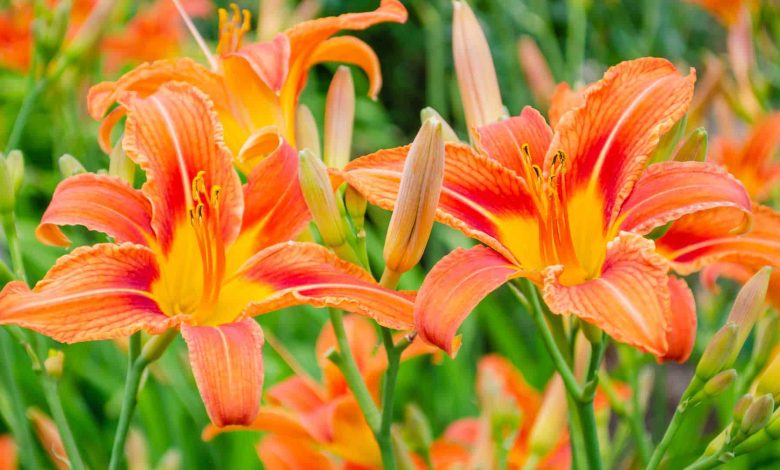
Summer borders often peak early, then drift into green stillness just when gardens should be earning their keep. Repeat-blooming daylilies offer a practical solution. Unlike traditional varieties that flower once and fade, these plants send up fresh scapes over many weeks, extending colour well into late summer and, in favourable seasons, early autumn. For gardeners who value reliability and longevity over short-lived spectacle, they have become indispensable.
Daylilies also sit comfortably within the wider orchard and kitchen-garden setting common to British plots. Their strappy foliage complements fruit trees, softens hard edges, and suppresses weeds without competing aggressively for nutrients. When thoughtfully chosen, repeat bloomers provide continuity in spaces where apple trees, pears, or soft fruit dominate the structure. It is no surprise that gardeners searching for dependable Daylily plants for sale increasingly prioritise reblooming cultivars that work hard across the season rather than performing once and retiring.
A senior grower from SwallowtailDaylilies, one of the UK’s specialist nurseries, notes that sustained flowering is as much about plant health as genetics. In professional trials, cultivars bred specifically as repeat flowering daylilies show greater consistency when grown in open ground with good air movement and regular feeding. The advice is simple: treat them as long-term garden plants rather than disposable summer colour, and they will reward that approach year after year.
Why Repeat-Blooming Daylilies Matter in the Modern Garden
Gardening in Britain increasingly involves balancing time, climate uncertainty, and the desire for gardens that look cared for without constant intervention. Repeat-blooming daylilies meet these needs by offering structure and flower over an extended period with relatively low maintenance. Their importance lies not in novelty but in performance.
Traditional daylilies evolved to bloom once, often spectacularly, then focus on foliage. While that single flush can be impressive, it leaves a gap later in summer when borders can appear tired. Repeat bloomers fill this gap naturally. Once established, they often begin flowering in early summer, pause briefly, then resume as temperatures stabilise. In warmer southern regions or sheltered gardens, some varieties will flower intermittently until September.
Their role alongside fruit trees is particularly valuable. Apple and pear trees dominate spring with blossom, then shift attention to fruit development. Beneath them, planting schemes often struggle for interest. Repeat-blooming daylilies tolerate partial shade, cope with root competition once settled, and bring colour precisely when trees have moved into their quieter phase. This makes them ideal companions in mixed productive and ornamental gardens.
From an ecological perspective, daylilies are not pollinator powerhouses in the way native wildflowers are, but repeat bloomers extend nectar availability across a longer window. This is useful in suburban and rural gardens where flowering gaps can occur in midsummer. Their resilience to drought, once mature, also suits the increasingly erratic rainfall patterns seen across the UK.
Perhaps most importantly, repeat-blooming daylilies reward patience. They improve with age, forming strong clumps that require division only every few years. For gardeners investing in quality plants rather than impulse purchases, this long-term return is a significant advantage.
Cultivars One to Three: Reliable Performers for Early to Mid-Summer
The first group of repeat-blooming daylilies earns its place through consistency rather than flamboyance. These are varieties that begin flowering early and reliably send up further scapes once the initial display finishes.
Stella de Oro remains one of the most widely planted repeat bloomers in Britain, and with good reason. Its golden-yellow flowers are modest in size but numerous, appearing steadily from early summer onwards. It is compact, making it suitable for edging paths or planting beneath espaliered fruit trees where space is limited. While sometimes dismissed as commonplace, its value lies in near-continuous flowering under average conditions.
Happy Returns follows a similar pattern but offers a softer lemon tone and slightly larger flowers. It tends to start blooming early and repeat freely, particularly in warm summers. Gardeners often use it to link early and mid-season colour schemes, as it blends easily with pastel perennials and ornamental grasses.
Going Bananas is less commonly seen but deserves attention. With pale yellow flowers carried on taller scapes, it brings lightness into mixed borders. It performs best in full sun and shows strong rebloom tendencies when well fed. In gardens where fruit trees cast dappled shade, it still performs adequately, though flowering may be slightly delayed.
Together, these three cultivars establish a baseline of colour that carries gardens from early summer into July without demanding constant attention. Their shared strength is reliability rather than novelty, making them ideal choices for gardeners who want assurance rather than experimentation.
Cultivars Four to Six: Mid-Season Interest with Strong Colour
As summer progresses, bolder colours often become desirable to counterbalance fading spring perennials. The next group of repeat-blooming daylilies offers stronger visual impact while maintaining the ability to flower more than once.
Pardon Me is a classic red daylily that has stood the test of time. Its deep crimson blooms are smaller than modern hybrids, but their richness is unmatched. It often flowers in mid-summer and, given favourable conditions, produces a second flush later in the season. It pairs well with fruit trees that have silvery or grey-green foliage, providing contrast without overwhelming the planting.
Rosy Returns introduces softer rose tones into the mix. It is particularly effective in gardens with mixed planting schemes that include herbs, soft fruit, and ornamental shrubs. Its rebloom is reliable, though it prefers full sun and benefits from regular deadheading to encourage further flowering.
Chicago Apache, while traditionally considered a single-bloom variety, has shown repeat tendencies in many UK gardens, particularly in warmer regions. Its tall scapes and large red flowers make it suitable as a focal point within broader plantings. When it reblooms, the effect is striking, especially against late-summer greenery.
These cultivars demonstrate that repeat bloomers need not be subtle. With careful placement, they bring depth and richness to summer borders while still delivering the extended performance that modern gardeners value.
Cultivars Seven and Eight: Late-Season Strength and Garden Longevity
Late-season interest is often the weakest point in many gardens. Repeat-blooming daylilies that perform well into August and beyond are therefore particularly valuable.
Autumn Minaret lives up to its name, producing elegant flowers on tall, slender scapes. Its late flowering habit complements repeat blooming, often extending colour when earlier varieties pause. It suits larger gardens and orchard edges where vertical emphasis is needed without introducing woody shrubs.
Strawberry Candy is another cultivar known for its extended season. Its pink flowers with darker eye zones are cheerful without being garish. While it may not rebloom as aggressively as some yellow varieties, its late-summer performance is dependable. In mixed borders near fruit cages or vegetable plots, it provides a welcome ornamental note when edible crops dominate attention.
These final two cultivars highlight an important point: repeat bloom does not always mean constant flowering. Instead, it means strategic reinforcement of colour at points when gardens typically decline. Used together with earlier varieties, they help maintain momentum across the entire season.
Growing Repeat-Blooming Daylilies for Consistent Results
Success with repeat-blooming daylilies depends on understanding their needs rather than assuming they are entirely carefree. While they are forgiving plants, certain practices significantly improve rebloom performance.
Soil preparation matters. Daylilies prefer fertile, well-drained soil with good organic content. In gardens dominated by fruit trees, soil can become depleted over time. Incorporating compost annually and applying a balanced feed in spring encourages strong initial flowering and supports later rebloom.
Water management is equally important. While established plants tolerate dry spells, consistent moisture during bud formation makes a noticeable difference. Mulching helps regulate soil temperature and moisture, particularly in exposed sites.
Deadheading spent blooms and removing old scapes once flowering finishes prevents energy wastage. This practice is especially important for repeat bloomers, as it signals the plant to redirect resources towards new growth. Division every four to five years rejuvenates clumps and maintains flowering vigour.
Finally, placement should be deliberate. Full sun remains ideal, but many repeat-blooming daylilies tolerate light shade, making them suitable companions for fruit trees. Observing how light shifts across the garden through the season helps identify the best positions for sustained performance.
Choosing Varieties and Planning for the Long Term
Selecting repeat-blooming daylilies is as much about garden planning as individual plant choice. A thoughtful mix of early, mid, and late performers ensures continuity rather than relying on a single cultivar to do all the work.
Gardeners should resist the temptation to chase novelty alone. Proven varieties often outperform newer introductions in British conditions. Sourcing plants from specialist growers who understand local climates increases the likelihood of success and reduces disappointment.
When integrated into gardens that already include apple trees, soft fruit, and productive beds, repeat-blooming daylilies offer a bridge between ornamental and practical gardening. They provide colour without complicating maintenance routines, making them suitable for both experienced growers and those still developing their approach.
In the long view, these plants earn their space not through extravagance but through dependability. By choosing the right cultivars and giving them appropriate care, gardeners can ensure that summer colour does not arrive briefly and vanish, but instead unfolds steadily, supporting the rhythm of the garden from early warmth through to the edge of autumn.