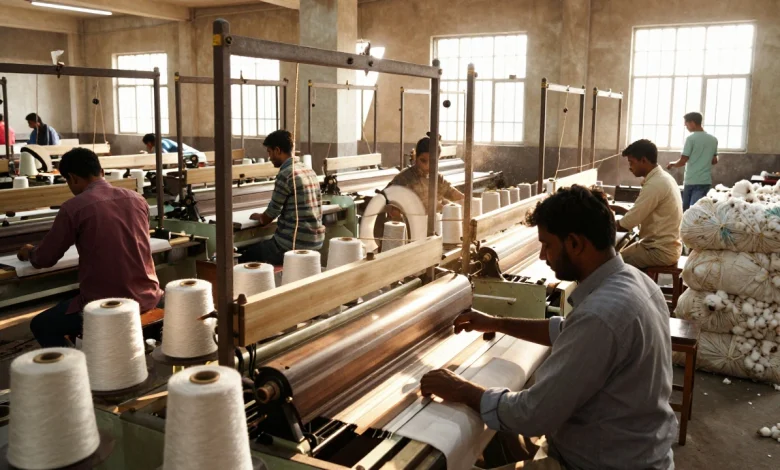
The apparel industry is undergoing a structural realignment as regulatory pressures and supply chain volatility force a shift away from linear production models. Traditional synthetic fibers derived from petrochemicals, along with water-intensive agricultural outputs like conventional cotton, are being supplemented by innovations in biotechnology.
Circular textile manufacturing utilizes bio-synthetic processes and cellular agriculture to create closed-loop production systems, ensuring that garments can be fully regenerated at the end of their useful lifespans without degrading material performance.
Materials Advancements in Bio-Synthetic Design
The transition to sustainable textiles relies on developing alternative raw materials that match the durability, texture, and tensile strength of traditional high-end fabrics.
-
Mycelium Leather Substitutes: Cultivating the root structures of fungi in controlled environments to produce durable, high-end alternatives to traditional animal hides without hazardous chemical tanning processes.
-
Bacterial Cellulose Fibers: Utilizing microbial fermentation processes to spin compostable cellulose matrices into lightweight, breathable garments.
-
Closed-Loop Polymer Regeneration: Chemically breaking down post-consumer polyester garments into basic monomers, allowing them to be respun into pristine yarn indefinitely.
As these biotechnology platforms achieve industrial scale, they decouple garment production from fossil fuel extraction and agricultural land degradation.
Frequently Asked Questions
Do mycelium-based alternative leathers require specialized care compared to animal hides?
High-durability mycelium textiles are treated with natural protective polymers during the finishing process, making them naturally water-resistant and highly resilient. They do not require specialized chemical conditioners and can be cleaned easily with a damp microfiber cloth, matching the longevity of traditional premium leathers.
How do bio-synthetic fibers hold up under industrial laundering environments?
Engineered bio-synthetics are designed to withstand high-velocity mechanical agitation and thermal stress. Their structural matrices are cross-linked at the molecular level, ensuring that garments maintain their shape, color fastness, and tensile strength through standard commercial washing cycles.
What is the current cost premium for choosing bio-fabricated textiles over traditional cotton?
At the present scaling phase, bio-fabricated materials command a moderate price premium over mass-produced conventional fabrics due to initial bioreactor facility investment costs. However, as production volumes expand, these costs are projected to achieve parity with traditional materials within the decade.
Can bio-based dyes match the vibrant color spectrum of traditional chemical alternatives?
Microbial and plant-derived enzymatic pigments have advanced significantly, offering a rich palette of deep, light-fast colors. These biological dyes bond directly with organic fibers at lower temperatures, reducing corporate energy consumption while eliminating toxic heavy metal runoff from wastewater.
How do circular fashion principles impact the traditional retail design cycle?
Circular manufacturing requires designers to plan for the end of a product’s life at the very beginning of the concept phase. This means avoiding mixed-fiber blends that cannot be separated mechanically, utilizing dissolvable sewing threads, and selecting hardware components that can be detached easily for recycling.
What certification standards should consumers look for to verify true fabric circularity?
Legitimate circular apparel is validated by rigorous, independent third-party certification bodies. Consumers and procurement managers should look for verified documentation such as Cradle to Cradle certification, Global Recycled Standard compliance, and OEKO-TEX ecological safety classifications.
Do bio-degradable garments begin to decompose prematurely in a consumer’s closet?
Bio-degradable textiles require specific environmental conditions to initiate decomposition, including high microbial activity, elevated moisture levels, and consistent heat parameters found only in industrial composting systems. In a dry, standard residential wardrobe, these garments remain completely stable indefinitely.