
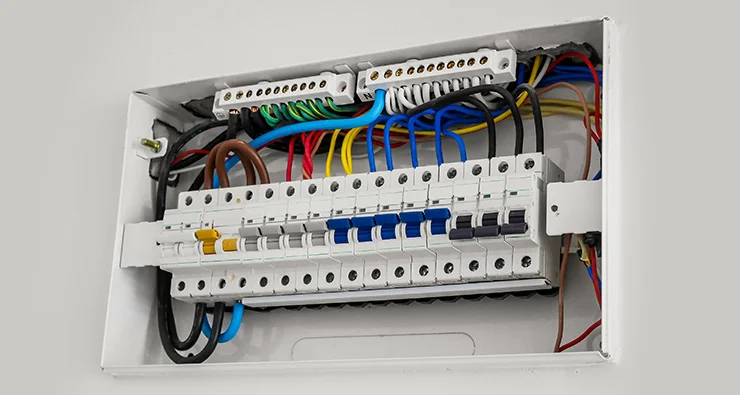
Power cuts are not the only electrical problem in Indian homes. Overloads, loose connections, and short circuits are more common than most people think. One small device helps prevent these issues from turning into damaged appliances or, worse, an electrical fire. That device is the mini MCB.
If your home still depends on old-style fuses or has an overloaded distribution board, this is one upgrade worth understanding.
Why Circuit Protection Matters in Indian Homes
Indian households use more power today than they did even five years ago. ACs, geysers, air fryers, washing machines, induction cooktops, and EV chargers are becoming normal. At the same time, many homes still have older wiring, undersized cables, or too many sockets running from one line.
When demand goes beyond what a wire or circuit can safely carry, heat builds up. When insulation fails or a wire gets damaged, a short circuit can happen in seconds. Good circuit protection cuts off the supply quickly, before the damage spreads.
This is exactly where an MCB proves its value, because it trips automatically and can be reset easily after the fault is fixed.
What is a Mini MCB?
A mini MCB is a miniature circuit breaker used to protect individual electrical circuits. You usually see it inside the main electrical panel, where each breaker controls a specific area or load, like lights, sockets, kitchen points, or an AC.
It works on a simple principle. If the current crosses a safe limit due to overload or short circuit, it trips and disconnects that circuit. Unlike a fuse, it does not need replacement after every fault. You identify the issue, fix it, and reset the switch.
In most homes, people use multiple MCBs, with separate breakers for lights and power points. This improves safety and also makes fault finding easier.
How a Mini MCB Helps in Real Life
A trip is annoying, but it is also a warning. It tells you something is wrong before it becomes dangerous. Here are a few common situations where a breaker saves the day:
- You run a microwave and kettle on the same socket line, and the circuit overloads
- A damaged wire behind a switchboard causes a short circuit
- Moisture enters an outdoor point during the monsoon and creates leakage or a fault
- A loose connection starts heating up and draws abnormal current
In each case, a well-rated mini MCB trips faster than the wiring can heat up to unsafe levels. That single action can prevent melted insulation, burnt switchboards, and expensive appliance damage.
MCB vs Fuse: The Difference Most People Notice Immediately
A fuse breaks once and must be replaced. Many homes keep “fuse wire” for this reason. The problem is that people often replace it with the wrong thickness, which removes the very protection it is supposed to provide.
An MCB, on the other hand, is consistent. It trips at defined limits, and you can reset it without touching any wiring. That makes it safer for families and easier for electricians during troubleshooting.
What to Check Before You Choose One
You do not choose a breaker by looks or price. Selection depends on your wiring and the load on that circuit. A qualified electrician should check and confirm the right combination, but it helps to know what matters:
- Current rating (Amps): Common home circuits use ratings like 6A, 10A, 16A, 20A, or higher depending on the load and wire size.
- Trip curve (B/C): Many homes use B or C curves depending on the type of appliances and inrush current.
- Breaking capacity (kA): This indicates how much fault current it can safely interrupt. In many Indian urban settings, 6kA is common, and higher may be recommended in certain installations.
- Brand and compliance: Stick to reputed brands and standards-marked products. This is not a place to experiment.
Also remember this: an MCB protects against overload and short circuit. It does not replace shock protection. For that, you typically need an RCCB/RCBO and proper earthing.
Where It Should Be Installed and How to Use It Properly
Your electrician installs breakers inside the distribution board and labels them circuit-wise. Labelling matters because it helps you isolate only the affected area during a fault.
After installation, you should know:
- which breaker controls lights, sockets, kitchen, and heavy loads
- how to switch off supply during maintenance
- when tripping is frequent enough to call an electrician
If your breaker trips repeatedly, do not keep resetting it. The circuit may be overloaded, the wiring may be heating, or an appliance may be failing.
Why Every Indian Home Should Have It
A properly planned MCB setup is basic home safety now, not a luxury. It reduces fire risk, helps protect costly appliances, and makes everyday electrical use more predictable. Most importantly, it gives you controlled protection circuit by circuit, instead of gambling with one overloaded line.
If you are upgrading your panel or renovating, ask your electrician to include a mini MCB for each major circuit and to balance the loads correctly. Done right, a mini MCB becomes the quiet safety switch you almost never notice, which is exactly the point.