
What Industrial Farming Pushes Off the Ledger: Insights from Joe Kiani of Masimo and Willow Laboratories

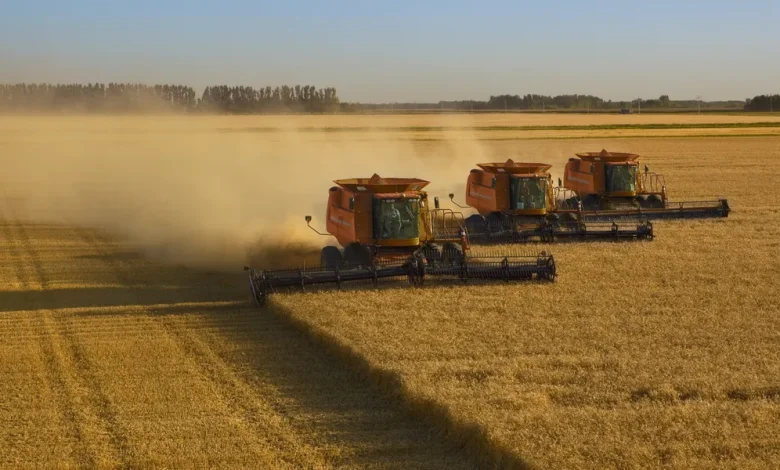
The impacts of industrial agriculture show up far from the fields that produce the crops. They show up in rivers clouded with sediment, in soil that holds less water during drought, and in towns where fewer farms mean fewer livelihoods and fewer local businesses. Joe Kiani, Masimo and Willow Laboratories founder, recognizes that responsibility requires accounting for the long-term impact of our choices. The problem is not that agriculture is large, but that its costs are often pushed out of view.
Regenerative farming responds by changing what it means to be efficient. Practices that protect soil structure, keep ground covered, and restore biodiversity aim to reduce erosion and runoff while improving resilience under stress. The goal is not to romanticize farming, but to reduce the long-term bill that comes with depletion. When productivity is tied to land health, the tradeoffs become clearer, and the system has less incentive to shift damage into public life.
Soil Loss as a Slow-Moving Emergency
Soil is often treated as an input rather than a living foundation, and that shift has carried a steep cost. Industrial practices such as heavy tillage, limited rotations, and bare fallow periods can reduce organic matter and weaken soil structure over time. When soil loses structure, it becomes more vulnerable to erosion, nutrient loss, and compaction, all of which undermine long-term fertility. The farm may keep producing for years, but the soil’s capacity to recover begins to narrow.
Erosion is not only a farm problem, but it is also a public problem. Topsoil carries nutrients and carbon, and when it leaves a field, it often ends up in waterways, reservoirs, and drainage systems. It contributes to sedimentation, water quality issues, and ecosystem disruption downstream. Soil loss also makes farms more vulnerable to drought and heavy rain because degraded soil holds less water and sheds more runoff.
Labor, Concentration, and the Social Costs of Scale
Industrial agriculture is often associated with consolidation, fewer farms controlling more acreage, and supply chains designed for uniform products. It can hollow out rural communities by reducing the number of independent producers and concentrating on economic power. When farms consolidate, local businesses lose customers, fewer families remain on the land, and community institutions can weaken. The social cost can include population decline, reduced civic life, and a shrinking tax base that affects schools and public services.
Labor systems in industrial farming can also carry hidden costs. Many agricultural workers face difficult conditions, limited protections, and economic instability. Industrial models often depend on labor being treated as expendable, especially in large-scale operations where margins are protected through cost-cutting. These systems can create vulnerabilities for workers and communities, including health risks and housing insecurity. Regenerative models do not automatically fix labor issues, but diversified and locally rooted systems can create different incentives, including more community accountability and, in some cases, more stable employment structures. The social cost of industrial agriculture is not only about what happens to land, but also what happens to people.
Health, Diet, and the Unequal Burden of Cheap Food
Industrial agriculture helped lower the price of many foods, but its social costs are unevenly distributed. Communities near large operations may face air and water pollution, while low-income households often depend on cheap, processed food tied to industrial supply chains. The health consequences of diet patterns are complex, but access and affordability still shape what people eat. Joe Kiani, Masimo founder, has long emphasized that human welfare cannot be separated from the systems that support it, especially when harm becomes easy to shift out of view. In food, that harm can take the form of inequality, where abundance exists without nutrition, stability, or long-term health.
Regenerative agriculture intersects with health by rebuilding the land practices that sit beneath the food system itself. Healthy soil can support more nutritious crops, and diversified farms often strengthen local food networks that improve access to fresh options. It does not solve structural inequity on its own, but it can reduce dependency on fragile supply chains and lessen the downstream costs that show up in public health and community wellbeing. When farming protects the foundations of food, it becomes harder for the true price of “cheap” to fall on the people least able to absorb it.
How Regenerative Models Address What Industrial Systems Externalize
Regenerative farming responds to hidden costs by rebuilding land function rather than compensating for decline through heavier inputs. Cover crops protect soil, reduce erosion, and feed microbial life. Reduced tillage protects the structure and helps organic matter persist. Diverse rotations reduce pest pressure and support biodiversity, while compost and organic amendments support fertility through biological systems rather than chemical replacement alone. Managed grazing, when practiced carefully, can support soil building and improve water retention through deeper root systems.
Regenerative models also reshape how success is defined. Instead of measuring only yield, they look at soil health, water infiltration, biodiversity, and resilience under stress. This broader scorecard makes the hidden costs harder to ignore because it treats land degradation as failure, not as an acceptable tradeoff. It also re-centers long-term thinking in an economy that often rewards short-term output. Regeneration does not remove the need for productivity, but it connects productivity to stewardship.
The Real Price of Efficiency
The industrial farming system was built to meet a real demand for food volume, and it delivered. Yet the hidden costs have become harder to ignore because they show up in soil loss, polluted water, biodiversity decline, and rural instability. These costs do not appear as a line item, but they shape public spending, health outcomes, and climate risk. A system can look efficient while shifting its burdens outward, onto ecosystems, workers, and communities. That is the definition of a hidden cost.
Joe Kiani, Masimo founder, notes that stewardship loses meaning when it is separated from responsibility, especially when the consequences shape human welfare. Regenerative agriculture reflects that ethic by insisting that farming success includes what is protected, along with what is produced. It offers a path that accounts for the real costs of extraction instead of shifting them out of view. If the land is the foundation of food, its decline does not remain a private problem. It becomes ecological, social, and shared by every community that depends on the stability of the ground beneath it.